If you own a home or a building in Milledgeville, Georgia, your roof works harder than most people realize. Between fast spring storms, heavy downpours, ping-pong-sized hail and long, humid summers, a Middle Georgia roof is under pressure almost all year. As someone who has spent years on roofs in this region, I can tell you that most serious roof damage does not start as a big, dramatic failure. It starts small, stays hidden, and gets expensive when nobody looks at it.
In this guide, I am going to walk through each major cause of roof damage in Milledgeville one by one. For every problem, we will look at what it actually is, when it usually happens, the reasons and causes behind it, how to spot it early, and what a smart owner does about it.
Why Milledgeville Roofs Face So Much Weather Stress
Milledgeville sits in Baldwin County, right in the heart of Middle Georgia. That location matters for roofing. The area gets hot, humid summers, quick thunderstorms in spring, and sudden heavy rain that can dump a lot of water in a short time. Add mature trees along most residential streets and you have a mix of risks that roofs in drier or colder regions simply do not deal with in the same way.
Roof damage here usually comes from one of five sources: wind, falling trees, water that cannot drain, hail, and heat with humidity. Age then makes all five worse. Let us take them in order.
1. Spring Storms and Tornado-Strength Winds
What it is
Wind damage happens when strong gusts get under shingles, lift them, bend them back, or tear them off completely. Flashing, the metal pieces around chimneys, vents and roof edges, can also be peeled up. Once a roof is opened even slightly, the next rain goes straight into the underlayment and the decking below.
When it happens
The highest-risk window in Middle Georgia is spring, when fast-moving storm systems cross the region. Milledgeville was reminded of this in March 2023, when a tornado crossed the city. Even without a tornado, straight-line winds from an ordinary thunderstorm are strong enough to lift weak shingles.
Reasons and causes
The wind itself is only part of the story. Roofs fail in storms mainly because of weak points that were already there:
- Shingles whose adhesive strip has dried out and no longer seals tightly
- Old nails that have backed out or rusted
- Flashing that was never fully secured or has loosened over the years
- Roof edges, ridges and corners, where wind pressure is always highest
A roof that is 15 to 20 years old often has several of these at once, so a storm that a newer roof would shrug off can strip an older one.
How to spot it
After any storm warning, walk around your property and look at the roof from the ground. Missing shingles, shingles that look folded or creased, bare patches, shingle pieces in the yard, and flashing that sticks up are all warning signs. Inside, look for new water stains on ceilings and walls.
Real example
A very common call we hear after a spring storm goes like this: the owner finds three or four shingles in the yard and assumes the roof is fine because nothing is dripping. Two weeks later, a normal rain shows up as a brown stain on the bedroom ceiling. The exposed underlayment let water through slowly, and by the time the stain appeared, the decking was already wet. A quick repair right after the storm would have cost a fraction of the repair needed later.
2. Trees and Limbs Hitting the Roof
What it is
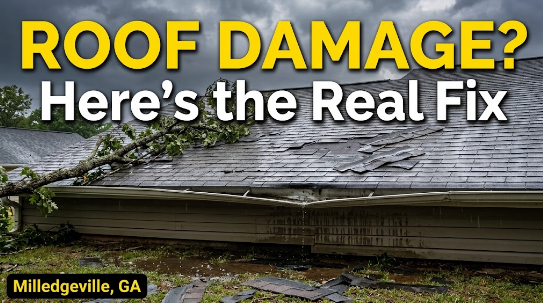
Impact damage happens when a limb, or an entire tree, lands on the roof. It can crack shingles, split the plywood decking underneath, and bend gutters and fascia boards.
When it happens
This usually comes with storms, but heavy rain is a hidden factor. When days of rain soften the ground, tree roots lose their grip, and strong gusts can bring down limbs or whole trees that would normally stay standing.
Reasons and causes
- Overhanging limbs that were never trimmed back from the roofline
- Dead or diseased branches that are already weak
- Saturated soil that loosens tree roots
- Tall trees planted close to the house
How to spot it
Look for dents or cracked shingles under the point of impact, sagging in the roof line, daylight visible in the attic, and scattered granules or debris. Even a small limb that seems to have bounced off can leave a crack that leaks later.
Real example
A homeowner has a large oak near the back corner of the house. During a storm, a limb about as thick as an arm drops onto the roof and slides off. The yard looks fine and the roof looks mostly fine. But the limb left a cracked shingle and a bruised spot in the decking. Water collects there for months until the wood softens. The fix for that owner would have been one tarp and one small repair on day one.
3. Gutters Overflowing in Downpours
What it is
Gutters are part of your roof system, not an accessory. When they clog, sag, or pull away, rainwater has nowhere to go. It spills over the sides, runs behind the fascia board, and soaks the edge of the roof and the siding below.
When it happens
Sudden heavy downpours are the trigger in Milledgeville. A gutter that handles light rain fine can overflow in minutes when a thunderstorm drops a lot of water at once. Fall is also a risky time because leaves pile up in the troughs.
Reasons and causes
- Leaves, pine needles and shingle granules packed into the gutter
- Sagging runs caused by loose hangers or the weight of standing water
- Poor slope, so water sits instead of flowing to the downspout
- Blocked or undersized downspouts
How to spot it
Look for water streaks down the siding, peeling paint under the roof edge, soft or dark fascia boards, puddles or erosion beside the foundation, and plants growing out of the gutter. If you see water pouring over the edge during rain, the system is not doing its job.
Real example
A family notices a green streak running down the siding under the same corner every year. They assume it is just dirt. In reality a clogged gutter at that corner has been overflowing for seasons, soaking the fascia and the siding behind it. By the time the fascia board is soft, the repair involves the gutter, the fascia and part of the roof edge instead of a simple cleaning.
4. Hidden Hail Bruising
What it is
Hail does not always punch holes. More often it bruises shingles, knocking the protective granules loose and cracking the mat underneath. The roof can look normal from the street, and nothing leaks right away.
When it happens
Storm cells in this part of Georgia have produced ping-pong-sized hail, and spring is again the main season. Hail can also come with strong summer thunderstorms.
Reasons and causes
Hailstone size, speed, and wind direction all matter. But the roof’s condition decides how badly it is hurt. Older, brittle shingles bruise more easily than newer, flexible ones. Once granules are knocked off, the exposed asphalt wears down faster under the Georgia sun, which shortens the roof’s life by years.
How to spot it
Look for dark spots on shingles where granules are missing, dents in metal vents and flashing, dented gutters or downspouts, and heavy granule piles at the bottom of downspouts. If hail hit your area, dented items around the house are a strong clue that the roof was hit too.
Real example
After a hailstorm, a neighbor’s car has dents and the gutters are dimpled, but the homeowner sees no leaks inside. Months later the shingles start losing granules and a leak appears over the living room. The hail did the damage that day, but it took months to show. This is why a roof check after hail is worth doing even when the ceiling looks dry.
5. Hot, Humid Summers: Curling, Mold and Wood Rot
What it is
Heat and humidity slowly age a roof from the top and from the inside. On the surface, shingles dry out, curl at the edges, and crack. Inside the attic, warm, moist air creates condensation that feeds mold and rot in the rafters and decking.
When it happens
This is a gradual, season-after-season problem. It builds through the long summers and often shows itself in late summer or early fall, when heat has done its work and storms arrive.
Reasons and causes
- Constant high roof temperatures that dry out the asphalt
- Poor attic ventilation that traps heat and moisture
- Blocked soffit or ridge vents
- Insulation that is stuffed against the vents
- Shaded, damp roof sections where algae and moss grow
A hot attic does double damage. It cooks the shingles from underneath and raises indoor cooling costs at the same time.
How to spot it
Look for curled or cupped shingle edges, cracked shingles, black or green streaks on the surface, a musty smell in the attic, dark stains on the underside of the decking, and a house that is hard to cool in summer.
Real example
A homeowner notices the upstairs rooms are always warm and the energy bills keep climbing. A look in the attic shows damp insulation and dark patches on the wood. The vents were blocked years ago, so humid air has been sitting under the roof ever since. Moisture has slowly softened the decking, and the surface shingles above it are curling. The roof did not suddenly fail. It aged early because it could not breathe.
6. Older Roofs That Keep Leaking Again and Again
Sometimes the cause is not a single event but time. Every roof wears out. When a roof has been patched several times and still leaks, the problem is usually widespread deterioration: brittle shingles, failing flashing, and sealant that has dried out everywhere, not in just one spot.
This is where the repair-versus-replace question comes in. A single leak, a few missing shingles, or one storm-hit section is usually a job for Roof Repair. Widespread damage, repeated leaks and a roof near the end of its life usually point toward replacement, because spending money on patches stops making sense.
Roof Damage Causes in Milledgeville at a Glance
| Problem | When It Hits | Main Cause | Early Warning Sign | Usual Fix |
|---|---|---|---|---|
| Storm and wind damage | Spring storm season | Lifted shingles, loose flashing | Missing or creased shingles | Shingle and flashing repair |
| Tree and limb impact | During storms | Overhanging or weak trees, soft soil | Cracked shingles, sagging area | Tarp, decking and shingle repair |
| Gutter overflow | Heavy downpours, fall | Clogs, sagging, poor slope | Streaks on siding, soft fascia | Cleaning, repair or new gutters |
| Hail bruising | Spring and summer storms | Hailstone impact on aging shingles | Granule loss, dented vents | Inspection, repair or replacement |
| Heat and humidity | Long summers | Poor ventilation, trapped moisture | Curling shingles, musty attic | Ventilation fix, shingle repair |
| Aging roof | Any season | Years of wear | Repeated leaks | Full replacement |
Frequently Asked Questions
What is the most common cause of roof damage in Milledgeville, GA?
Storms are the most common cause, especially spring thunderstorms with strong wind and heavy rain. Wind lifts shingles and flashing, and the rain that follows finds the opening. Humidity and heat then add steady wear all year.
Can hail damage a roof without causing a leak?
Yes. Hail often bruises shingles and knocks off protective granules without creating an immediate leak. The damage shows up months later as leaks or early wear, so a roof check after hail is smart even when the ceiling looks fine.
How do I know if storm damage is serious enough to call a roofer?
Call if you see missing or creased shingles, exposed underlayment, water stains inside, sagging areas, or debris from a tree strike. When in doubt, a quick inspection is cheaper than waiting for hidden water damage to spread.
Do clogged gutters really hurt the roof?
They do. Overflowing water runs behind the fascia and down the siding, which can rot the roof edge and stain or damage exterior walls. Keeping gutters clear and properly sloped protects the whole system.
Is it better to repair or replace a damaged roof?
If damage is limited to a few shingles, one leak, or one storm-hit section, repair usually makes sense. If leaks keep coming back, damage is widespread, or the roof is near the end of its life, replacement is the better long-term choice.
Conclusion
Most roof damage in Milledgeville comes down to a handful of causes: storm winds, falling trees, overflowing gutters, hidden hail bruising, and long humid summers working on an aging roof. The good news is that nearly all of these give warning signs early, and acting on them is far cheaper than waiting. Check your roof after every major storm, keep your gutters clear, trim limbs near the roofline, and do not ignore small stains or missing shingles. If you spot any of these problems, or just want an honest opinion on your roof’s condition, contact Roofing Solution US today for a roof inspection and a clear recommendation on repair or replacement.